Open Bar vs Cash Bar Cost: WNY Event Budget Guide
Deciding between an open bar and a cash bar for your Western New York wedding or event? We break down realistic cost comparisons, New York alcohol laws, and budget-saving strategies.
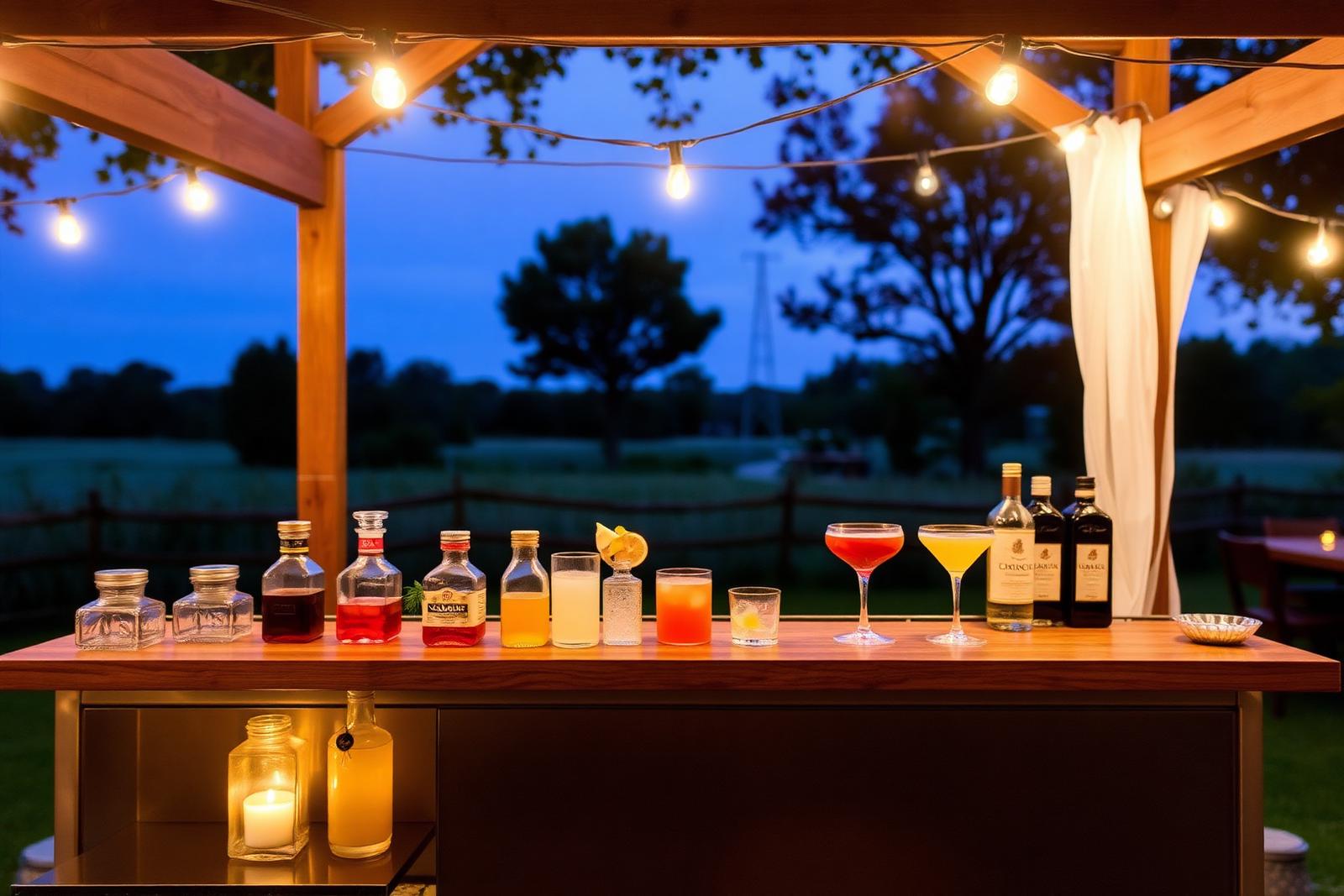
When planning a wedding at a Finger Lakes vineyard, a corporate gala in downtown Buffalo, or a backyard milestone celebration in Pittsford, one of the single largest expense categories on your budget sheet will be beverage service. Deciding how to structure your bar service isn't just a matter of party etiquette—it directly impacts your bottom line by thousands of dollars.
Navigating the open bar vs cash bar cost debate in Western New York involves more than comparing beverage packages. You also have to navigate New York State Liquor Authority (SLA) regulations, venue insurance requirements, and the true cost of venue markups versus independent mobile bartending.
As a licensed, insured, and TIPS-certified mobile bartending service operating across Rochester, Buffalo, Syracuse, and the surrounding suburbs, we break down the real math behind open bars, cash bars, and hybrid alternatives so you can make an informed decision for your event.
Understanding the Real Math: Open Bar vs. Cash Bar Cost Breakdown
To evaluate open bar vs cash bar cost accurately, you must understand how traditional venues structure their pricing compared to the actual cost of beverage inventory and labor. All-inclusive venues typically charge per person per hour for an open bar, regardless of how much your guests actually consume.
For a standard 150-guest wedding in the Rochester or Buffalo metro areas, a full open bar through a traditional venue catering contract typically ranges between $35 and $65 per adult guest for a 4- to 5-hour reception. That totals $5,250 to $9,750 just for drink service, excluding taxes and service fees.
A cash bar shifts the drink cost entirely to your guests, with drinks priced individually between $6 and $14 each. However, hosting a cash bar does not make the bar entirely free for the host. Most venues and caterers charge setup fees, minimum spend guarantees, and dedicated bartender hourly rates even when guests pay for their own drinks.
- Traditional Open Bar (Venue Catered): $35–$65 per guest for 4-5 hours
- Dry-Hire Mobile Open Bar (Host Buys Alcohol): $15–$25 per guest overall cost
- Cash Bar Host Expenses: $300–$800 in venue setup, bartender hourly rates, and minimum guarantees
- Hybrid Bar (Beer & Wine Open, Spirits Cash): $20–$35 per guest overall cost
New York State Liquor Laws and Cash Bar Realities
In New York State, money cannot legally change hands for alcohol at a private event unless the vendor holds a specific retail liquor permit or temporary beer/wine permit issued by the NYS Liquor Authority. Many private estates, historic barns in Canandaigua, and municipal parks in Monroe or Erie County do not hold active retail liquor licenses.
If you attempt to host a cash bar at a venue without an active SLA retail license, selling drinks to your guests—even to cover costs—can lead to severe fines or shutdown by law enforcement on the day of your event.
Because of these regulations, dry-hire mobile bartending has become the most popular legally compliant and cost-effective alternative in WNY. Under NY law, the host purchases the alcohol directly from state-licensed retailers (such as Wegmans, Premier Group, or local beverage centers), while our mobile service provides the insured, TIPS-certified bartenders, physical portable bars, mixers, garnishes, ice, and glassware.
The Real Cost of an Open Bar in Western New York
If you want to provide a hosted open bar without paying venue-inflated markup rates, dry-hire mobile bartending offers massive savings. When you buy your own liquor, beer, and wine at retail pricing, your average beverage cost per guest drops to approximately $10–$14 for the alcohol itself.
Combining retail alcohol pricing with professional mobile bartending service creates a premium open bar experience at a fraction of venue package rates. Here is a realistic expense model for a 5-hour event with 150 guests using our dry-hire service:
- Alcohol Purchases (Host buys at local retail): ~$1,500 – $1,800
- Mobile Bartending Package (Bartenders, Portable Bar, Mixers, Ice, Glassware, Insurance): ~$1,200 – $1,600
- Total Real Open Bar Cost: ~$2,700 – $3,400 (or $18 – $22 per guest)
- Traditional Venue Open Bar Cost for 150 Guests: ~$6,000 – $9,000
Hidden Expenses and Downsides of a Cash Bar
While a cash bar seems like an easy way to trim thousands from your wedding or event budget, hosts are often surprised by hidden expenses and operational friction.
First, transaction speeds drop significantly during cash bars. Processing credit cards or making change for cash adds 30 to 45 seconds per order, causing long lines and forcing you to hire additional bartenders to keep up with demand.
Second, if your guests do not reach the venue's required minimum cash bar sales threshold (often $1,000 to $2,000), you as the host must pay the difference out of pocket at the end of the night.
- Longer wait times due to payment processing at the bar counter
- Host liability for unmet sales minimums set by venues
- Risk of guest dissatisfaction, especially for out-of-town attendees traveling to WNY
- Venue labor and setup fees remain active regardless of guest drink spending
Hybrid Bar Options: Budget-Friendly Middle Ground
If an all-out open bar stretches your budget but a full cash bar feels too restrictive, hybrid bar service offers a practical middle ground. These strategies keep host costs low while maintaining a hospitable environment for guests.
A popular approach across Syracuse and Rochester venues is the Open Beer & Wine Bar with Signature Cocktails. You supply two craft beers (such as local brews from Rohrbach's or Southern Tier), two wines, and two pre-batched signature cocktails. Spirits outside the signature menu are omitted, controlling costs while keeping the bar 100% complimentary for guests.
Another effective strategy is a Timed Open Bar. Hosts provide a fully open bar during cocktail hour and the first two hours of the reception, then transition to complimentary beer and wine for the final two hours.
- Beer & Wine + 2 Signature Cocktails: Keeps host costs under $15/person for alcohol
- Timed Open Bar: Open bar during cocktail hour/dinner, transition to beer/wine late night
- Capped Consumption Bar: Host prepays a set dollar amount (e.g., $1,500); bar transitions once cap is reached
Staffing Ratios and Alcohol Calculators for WNY Events
Accurate planning prevents overspending on excess alcohol or extra labor hours. Standard industry formulas assume guests consume an average of two drinks during the first hour of an event and one drink per hour thereafter.
For a 5-hour event with 100 guests, plan for roughly 600 total drinks. Breaking this down by standard proportions (50% beer, 30% wine, 20% spirits) yields the following inventory targets:
- Beer: 300 bottles/cans (12–13 cases)
- Wine: 36 bottles (3 cases)
- Spirits: 10–12 750ml bottles (for 120 liquor drinks)
- Staffing Ratio: 1 TIPS-certified bartender per 50-75 guests for open bar; 1 per 50 guests for complex cocktail menus
Venue Specifics: Buffalo Lofts, Finger Lakes Barns, and Rochester Parks
Venue layout and local policies heavily influence your final bar setup costs. For example, historic loft venues in Buffalo's Larkinville district or rustic barns near Canandaigua Lake often lack dedicated ice machines or draught lines. Hiring a mobile bar service that supplies heavy-duty coolers, commercial ice, and portable draft systems prevents unexpected equipment rental costs.
Additionally, municipal venues like Rochester City Parks or Onondaga County Parks in Syracuse require a Certificate of Insurance (COI) featuring $1,000,000 in General Liability and Liquor Liability coverage, listing the municipality as an additional insured.
Working with a fully insured, TIPS-certified mobile bartending company satisfies all local venue requirements while protecting you from alcohol-related liability.
Frequently asked
Is a cash bar significantly cheaper for the host than an open bar?
While a cash bar shifts alcohol costs to guests, the host must still pay for bartender hourly labor, bar setup fees, insurance, and potential venue minimum guarantees. Utilizing a dry-hire mobile bartending service for an open bar often costs only slightly more than a cash bar setup while offering a far superior guest experience.
Can I legally host a cash bar at a private venue or barn in NY?
Under NYS Liquor Authority laws, you cannot sell alcohol or charge for entry/drinks at a private venue unless the entity holds a specific retail liquor license. For non-licensed venues like private barns or estates, dry-hire open bars (where the host supplies the alcohol for free) are the standard, legally compliant option.
How much alcohol do I need to buy for a 150-person open bar?
For a 5-hour event with 150 guests, you should plan for approximately 900 total drinks. A standard mix requires about 18–19 cases of beer, 4.5 cases of wine, and 15-18 bottles (750ml) of spirits.
What does a mobile bartending company provide if the host buys the alcohol?
Our dry-hire mobile bar service supplies TIPS-certified bartenders, liquor liability insurance, portable bar structures, ice, high-end mixers, handmade syrups, fresh garnishes, disposable or glass drinkware, and custom menu design.
Where can I buy alcohol for my dry-hire event in Western New York?
Hosts can purchase beer, wine, and spirits at any licensed retail outlet in NY. Popular options include local grocery retailers like Wegmans for beer and mixers, large beverage centers like Premier Group in Buffalo or Century Liquor & Wines in Rochester, or local Finger Lakes wineries and breweries.
Planning an event in Western NY?
Get a personalized quote in under a minute. No obligation.
Keep reading
How Much Does a Mobile Bartender Cost in Western NY? (2026 Pricing Guide)
Straight-from-the-industry pricing for hiring a mobile bartender in Western NY — hourly rates, packages, staffing ratios and the details that quietly move the number up or down.
PlanningHow Much Alcohol Do I Need for My Party? (Guest-Count Calculator + Formulas)
Stop over-buying. Here's the bartender's formula for how much beer, wine and liquor a 25, 50, 100 or 150-guest event actually drinks — and how to adjust for weddings, corporate events and long receptions.
WeddingsWedding Bar Packages Explained: Open Bar vs Cash Bar vs Limited Bar
Open bar, cash bar, limited bar, tab-until-it-runs-out. Here's the honest breakdown of what each wedding bar structure costs, how guests actually experience them, and which one to pick.